I was standing in the start corral in Shinjuku with 39,000 other runners, running on two nights of four hours’ sleep and three weeks removed from the worst tonsillitis-flu combination I’ve had in years. Not exactly the preparation I’d planned.
But I was there, and I was ready. The target was to beat my Berlin time of 3:44 — illness or not, I wasn’t lowering the bar.
My watch had other ideas, though. It recorded the time but not the distance, which meant I spent the race doing rough pace calculations in my head from the kilometre markers. Not ideal when you naturally think in miles.
The Build-Up
After Berlin in September, I gave myself a couple of months off from structured training. No plan, no programme — just running for the sake of it. After months of following Runna to the letter, it felt good to head out without checking what pace I was supposed to hit.
In mid-November I picked Runna back up again for Tokyo. I got about two and a half months of solid, consistent work in before my body had other ideas. Tonsillitis and flu hit at the same time, around the 9th of February. It was brutal. I was completely floored for the best part of two weeks, right when the training plan had its most important long runs scheduled. I missed my last two long runs entirely, along with the sessions around them.
The doctor I saw in Porto told me — in Portuguese, via a translator — that I shouldn’t be running. My response was simple: there are plenty of things we do in life that we shouldn’t 😂. I wasn’t going to miss Tokyo.
Race Day
Tokyo is a flat, fast course — one of the easiest of the Majors by reputation, and I’d agree with that. The weather started well, though it warmed up as the morning went on.
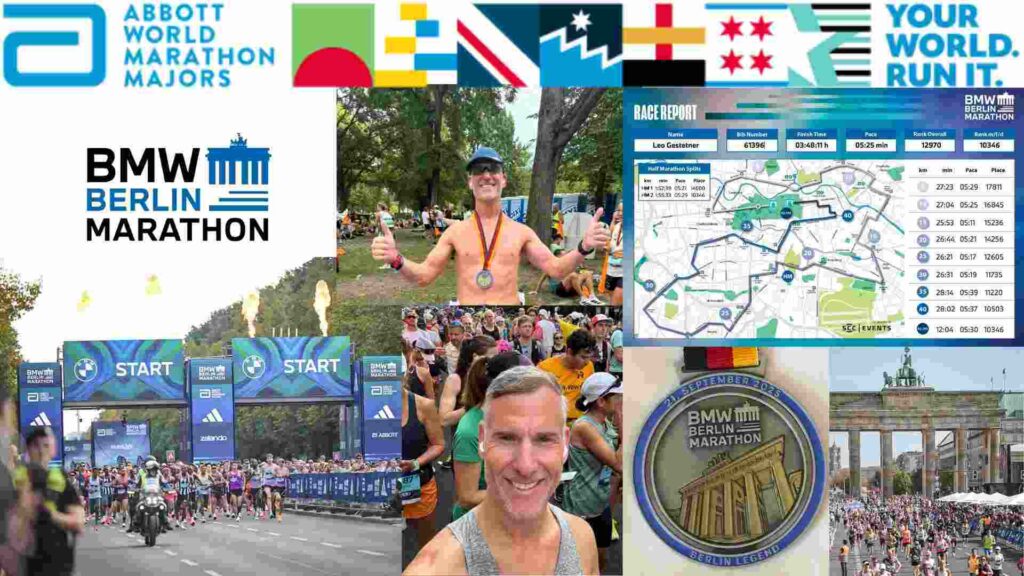
The first half felt brilliant. I came through the halfway mark in 1:49:29, running comfortably at around 5:10 per kilometre. No cramps, no knee trouble, no breathing issues. I was on for a strong time.
Then it fell apart.
Somewhere after 25 kilometres, the energy just drained out of me. Not cramps — that’s been my enemy before — but a total loss of power. My legs still worked, they just had nothing left to give. My pace dropped from 5:10/km to over 6:00/km in the final stretch. The second half took 2:07 compared to 1:49 for the first. I could feel the missing training, the illness, the jet lag — all of it catching up at once.
I crossed the line in 3:56:50. Slower than Berlin, and slower than I wanted. But still under four hours, still top 25% in a field of 39,000, and — given everything that went wrong in the weeks before — I’ll take it 💪
What I Learnt
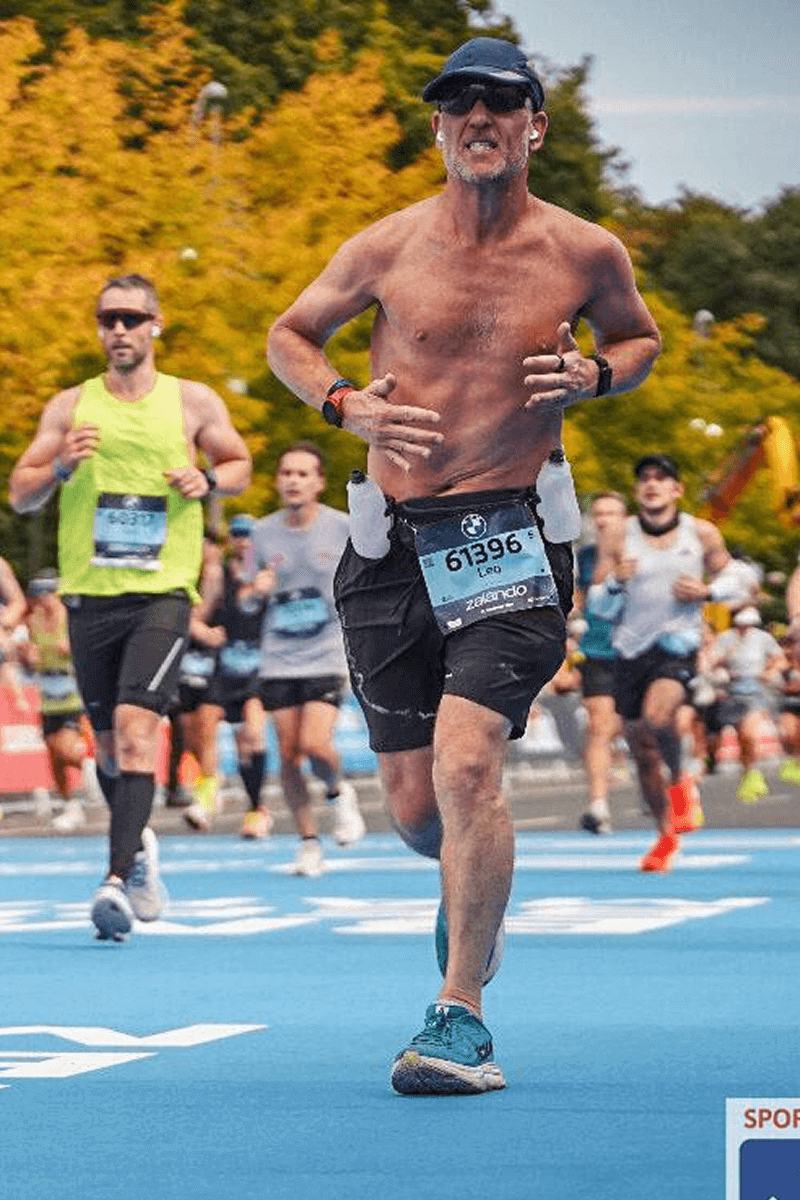
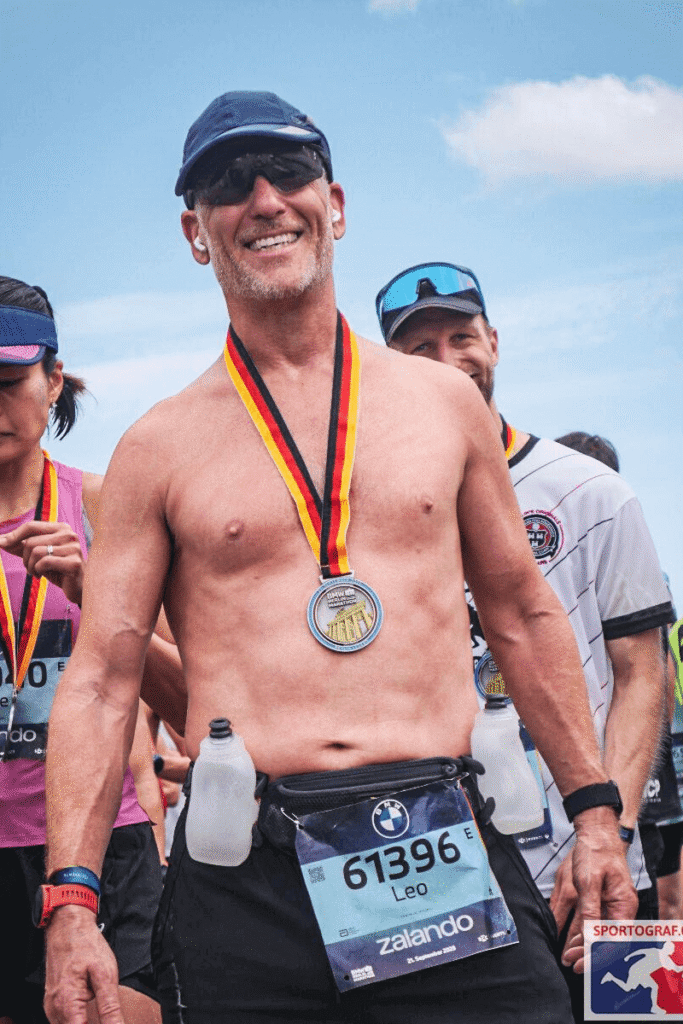
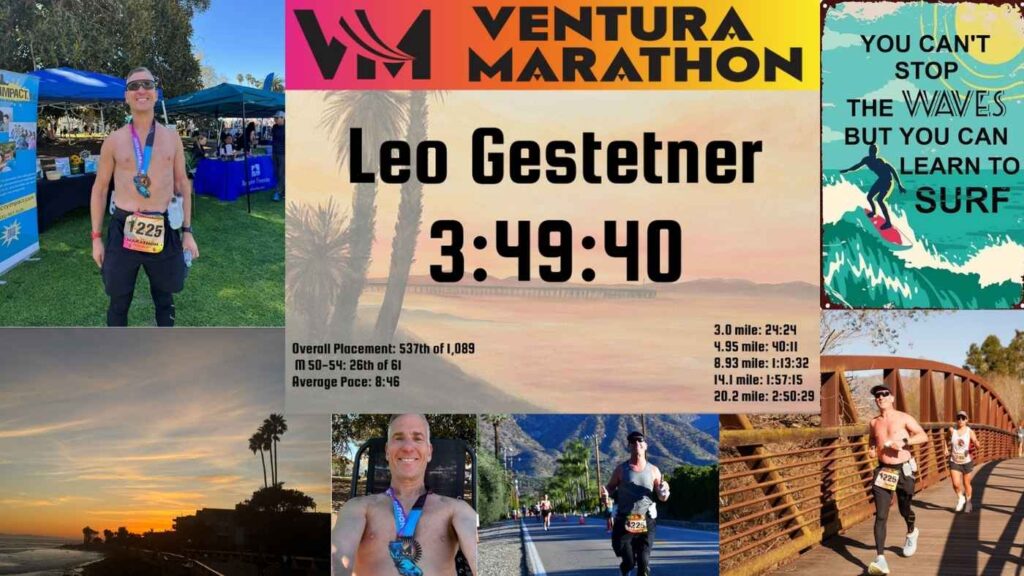
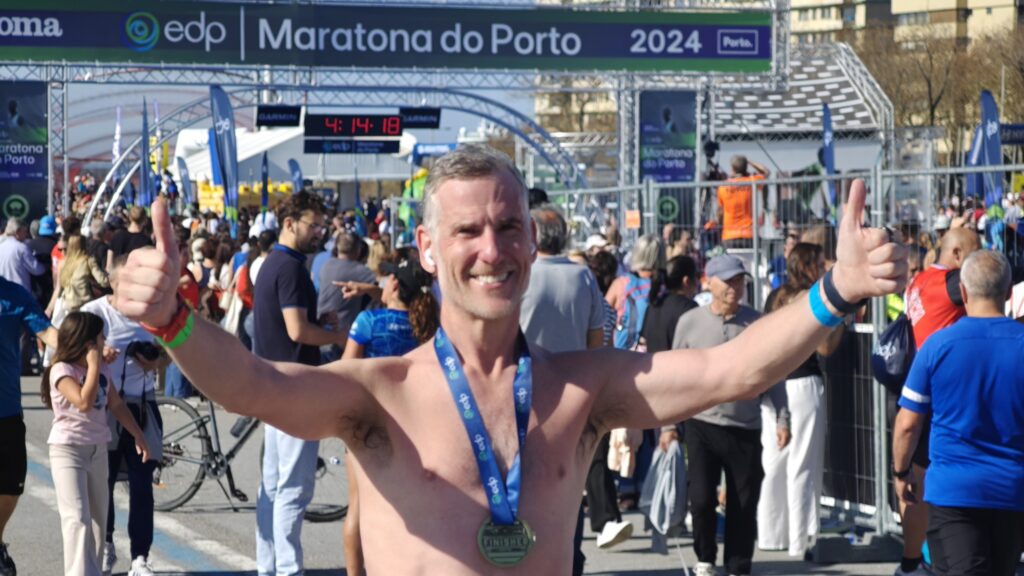
Four marathons in sixteen months, and every single one has taught me something different. Porto taught me about fuelling and cramps. Ventura taught me about pacing. Berlin showed me what’s possible when training goes right.
Tokyo taught me about acceptance. Somewhere around 30 kilometres, I knew the Berlin time was gone. I had a choice: fight it and fall apart, or reset the goal. I chose sub-4, locked in, and got it done. That mental shift mid-race — letting go of what you wanted and committing to what’s still possible — was harder than any hill.
No excuses, just facts. And something to build on.
Ten Days in Japan
The best part of the trip had nothing to do with running. My son came out to watch the race, and afterwards we spent ten days travelling around Japan together. That time — exploring a country neither of us had been to, eating ridiculously good food, just being together — was worth more than any finish time.
It’s one of the things I love about the Majors. Each race takes me somewhere extraordinary, and having family or friends there makes it even better.
The Updated Plan
The 7 Majors goal is very much alive, and the schedule has taken shape:
2026: Tokyo (done), London (26th April), Chicago (October) — all confirmed.
2027: Boston, Sydney, New York — to finish the set.
London is next, and it’s coming fast. I started proper training this week, which gives me roughly a month of real preparation before tapering. It’s tight. After Berlin I thought I might chase sub-3:45 across all seven, but I’m being realistic — the goal for London is under four hours. Get it done, run smart, and then build towards Chicago with a proper training block behind me.
If the last eighteen months have taught me anything, it’s that the plan rarely survives contact with real life. Illness, injuries, jet lag — there’s always something. The trick is showing up anyway, adjusting expectations without losing ambition, and having fun along the way.
Five more cities. London’s in seven weeks. Let’s see what a month of focused training can do 🏃